
A slow, thoughtful, handwritten-style recipe journal entry
There are days when the kitchen feels like a quiet sanctuary, a place where the steam rising from a saucepan carries away all the noise from the outside world. On those days, I reach for herbs that speak softly—not shouting with the intensity of chili or demanding attention like rosemary can. Tarragon is one of those herbs that seems to whisper instead of yell, and in this recipe for Keto Tarragon Cream Chicken, the herb becomes the calm center of a velvety, low-carb dish that feels comforting, balanced, and warmly aromatic.
This dish has a kind of old-world charm. It reminds me of the classic French combinations of cream, pan-seared chicken, and a single, defining herb. But because we’re building a keto-friendly meal, the recipe leans fully into fats while keeping sugars and starches away. What we’re left with is a rich, herb-scented chicken dish that never feels heavy or cloying—thanks to the way tarragon brightens everything it touches.
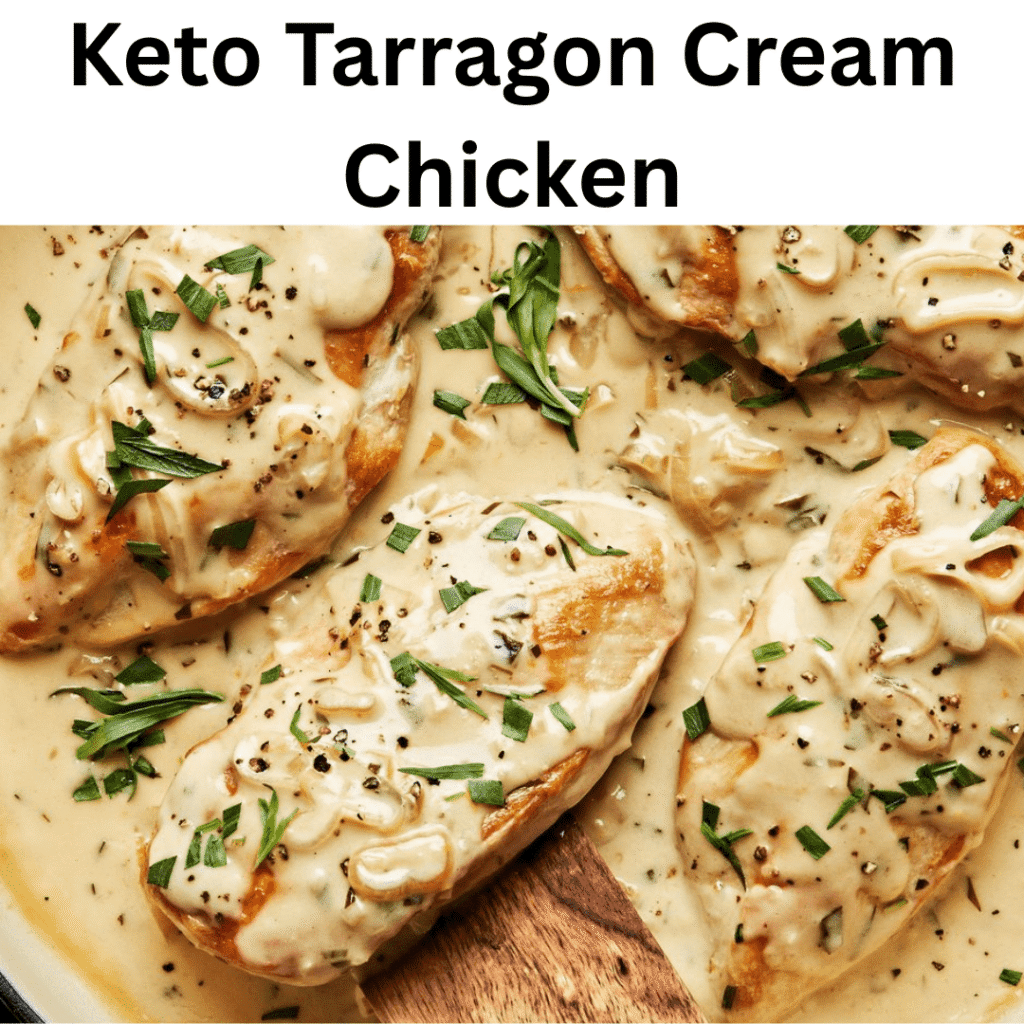
Below, I’m going to walk through each part of this dish in a way that feels almost like you’re flipping through someone’s personal cooking journal: the ingredients, the technique, the lessons learned the hard way, the little sensory cues to watch for, and a handful of serving suggestions. This isn’t just a list of directions—it’s a slow stroll through the recipe, with notes, observations, aromas, textures, and even the small moments that make cooking feel personal.
Ingredients:
Keto cooking often relies on the strategic pairing of fat and herbs to build depth without sugar or starch, so every item matters.
Chicken (3 pieces, boneless)
Chicken breasts are classic, but feel free to use thighs if you prefer something richer. Breasts work exceptionally well for searing since they absorb the sauce without falling apart.
Butter (2 tablespoons)
The butter doesn’t just add fat; it adds flavor. When it browns slightly in the pan, it picks up a nutty aroma that will become the silent backbone of the sauce.
Olive Oil (1 tablespoon)
This keeps the butter from burning and brings a rounder mouthfeel to the searing step.
Garlic (3 cloves, minced)
Fresh garlic always trumps jarred garlic here; the sweetness and aroma you get when it hits the hot pan are essential.
Heavy Cream (1 cup)
This is what transitions the dish from a simple sauté to something lush and almost restaurant-level.
It’s keto’s best friend.
Chicken Broth (½ cup)
This prevents the cream from becoming too thick and balances richness with savory depth.
Tarragon (1 tablespoon fresh, chopped, or 1 teaspoon dried)
Tarragon has a unique profile—slightly sweet, slightly anise-like, and bright in a way that doesn’t overpower. Fresh is best, but dried works beautifully when allowed to bloom in hot liquid.
Dijon Mustard (1 teaspoon)
This is subtle, not sharp, not overpowering. It simply gives the sauce a little backbone—a faint tang that rounds out cream-heavy dishes.
Paprika (¼ teaspoon)
Used mostly for color and warmth, not heat.
Salt and Pepper (to taste)
Season liberally but taste as you go.
Optional: Lemon (a small squeeze)
A hint of acidity can wake everything up, but it’s optional depending on your palate.
Step-by-Step Instructions with Full Detail and Sensory Guidance
What follows isn’t just “do this, do that.” Instead, think of it as a detailed cooking walkthrough, the kind a home cook might write in a well-worn journal. I’ll share subtle visual cues, aromas to look for, timing notes, and the kinds of observations that make a dish feel alive rather than robotic.
1. Preparing the Chicken: The Quiet Start
Cut the chicken. This step is slow and quiet; there’s no heat yet, no sizzle—just you, the meat, and the seasonings. Pat the chicken dry, not out of obligation but because moisture prevents browning. A dry surface allows the chicken to cling to the hot pan later, forming that golden crust that tastes like a promise of what’s to come.
Season both sides generously with salt, freshly ground black pepper, and a dusting of paprika. Don’t be shy with the seasoning. Chicken breasts are mild, almost blank-slate proteins, and they thank you when you give them a bold foundation.
2. Searing the Chicken: Where the Real Cooking Begins
Place a wide skillet on the stove. Turn the heat to medium-high.
Add oil and butter in the pan. They melt together, the butter’s golden tone swirling into the olive oil’s greenish hue. The butter foams lightly, and this is your sign that the pan is hot.
Lay the chicken breasts into the pan without crowding them. They should sing immediately—a sharp, satisfying sizzle that promises a good sear. Don’t move the chicken right away. Let that initial contact form a crust. About four to five minutes later, the bottoms should be caramel-golden.
Flip them once. Don’t poke, don’t press—let them do their work.
After another 4–5 minutes, remove the chicken from the pan. They’re not fully cooked yet, and that’s fine; they’ll finish cooking in the sauce.
Set them aside on a plate.
3. Creating the Flavor Base: Garlic and Fond
The pan now holds the remnants of flavor—brown bits stuck to the bottom called “fond,” melted fat, and the aroma of seared chicken. Don’t wash it, don’t wipe it—this is where the heart of your sauce begins.
Add minced garlic. It should hit the fat with a soft hiss, softening without burning. Stir it gently. Within seconds it becomes fragrant—this is the moment garlic transforms from sharp to sweet.
4. Deglazing with Broth: Unlocking Depth
Pour in the chicken broth. The moment it hits the pan, the fond releases from the bottom as you scrape with a wooden spoon. This is where you build complexity—nothing added, nothing wasted. The broth should simmer and reduce slightly, concentrating flavor.
5. Cream, Mustard, and Tarragon: The Velvet Trio
Slowly pour in the heavy cream. The broth swirls into it, turning pale ivory. Add the teaspoon of Dijon mustard and stir until it disappears completely into the sauce.
Now, sprinkle in the tarragon. If using fresh, inhale the aroma as the leaves meet the warm cream—there’s a slightly sweet, almost licorice whisper. If using dried, give it an extra minute to bloom fully so the herb flavor spreads through the sauce.
Let everything simmer gently. Not a rolling boil—just a soft, steady bubble.
You’ll notice the sauce thickening gradually. It clings to the spoon instead of dripping off.
6. Returning the Chicken to the Pan: The Home Stretch
Place the chicken breasts back into the skillet. Nestle them into the sauce so some of the creamy mixture comes up around the sides. Spoon a little sauce over the tops.
Lower the heat to low. The goal now is slow finishing, not rushing.
Simmer the chicken in the sauce for eight to ten minutes. This locks in moisture and allows the chicken to absorb flavor deeply.
Taste the sauce toward the end. Add salt, pepper, or a tiny squeeze of lemon if you want a spark of brightness.
Texture, Aroma, and Flavor Notes (Kitchen Journal Style)
This dish has a few defining characteristics you can watch for:
Texture:
The sauce should be thick to coat a spoon. The chicken becomes tender, almost silky when cut.
Aroma:
A mixture of buttery warmth, sweet garlic, soft tarragon, and the faint tang of Dijon.
Flavor:
Creamy without heaviness, herbaceous without sharpness, savory with a gentle background sweetness.
Mistakes to Avoid (From Experience, Not Theory)
- Burning the garlic – ruins the sauce instantly. Keep the heat moderate.
- Boiling the cream – creates separation. Low simmer only.
- Under-seasoning the chicken – the sauce is rich; the chicken needs backbone.
- Overcrowding the pan during searing – no crust forms if the pan steams.
- Adding lemon too early – can curdle the cream; always add at the end.
Keto Serving Suggestions
Here are keto-friendly sides that pair beautifully with this dish:
- Cauliflower mash (buttery and smooth)
- Sautéed spinach with garlic
- Roasted zucchini coins
- Green beans in butter and lemon zest
- Cauliflower rice with herbs
Variations (All Keto-Friendly)
1. Tarragon Mushroom Chicken
Add sliced mushrooms after the garlic step. They release liquid and deepen the sauce.
2. Creamy Tarragon Chicken Thighs
Use bone-in or boneless thighs for richer flavor.
3. Tarragon Lemon Butter Chicken
Increase lemon at the end for a fresher, springlike feeling.
4. Tarragon Mustard Cream Chicken
Double the Dijon for a more assertive, French-style tang.
Why This Recipe Works (The Flavor Science)
- Tarragon + Cream → The soft anise flavor brightens rich dairy.
- Mustard + Chicken Broth → Adds acidity and umami to balance fat.
- Searing First → Creates Maillard browning for deeper overall flavor.
- Simmering to Finish → Keeps chicken tender and prevents dryness.
Keto cooking relies heavily on fat for satiety, so building contrast—brightness, herbiness, savoriness—is key. This recipe balances all three.
A Personal Reflection on Tarragon in Cooking
Tarragon is one of those herbs that doesn’t get enough attention, mostly because it isn’t as commonly stocked as parsley or basil. But the moment you cook with it, you realize why French cooking cherishes it. There’s something elegant and slightly nostalgic about it. It reminds you of dishes that simmer on a quiet evening, dishes that don’t rely on excessive spices or complicated steps, but instead on patience and harmony of ingredients.
This recipe makes tarragon the star without overwhelming the palate. In keto cooking, where dairy often plays a heavy role, tarragon keeps the dish from feeling too rich or one-dimensional.
There’s balance here: warmth from the pan-seared chicken, brightness from the herb, subtle bite from Dijon, and deep comfort from cream.
It’s a simple dish, but simplicity often reveals the best flavors.
Final Thoughts: A Comforting Keto Classic
By the time you ladle the sauce over the chicken and take that first bite, you’ll notice how the flavors blend naturally. Nothing feels forced. The chicken is tender, the cream rich but not cloying, and the tarragon ties everything together like a soft ribbon.