

Keto Lemon cake is best when you’re following a ketogenic diet, you’re aiming to keep net carbohydrates low (typically under 20-50 g/day depending on your plan), while still getting enough healthy fats, moderate protein, and satisfying flavour. Regular cakes are loaded with flour and sugar—and those carbs add up fast—so the challenge is to recreate a cake that “feels like cake” (moist crumb, good rise, nice texture) yet stays keto-friendly.
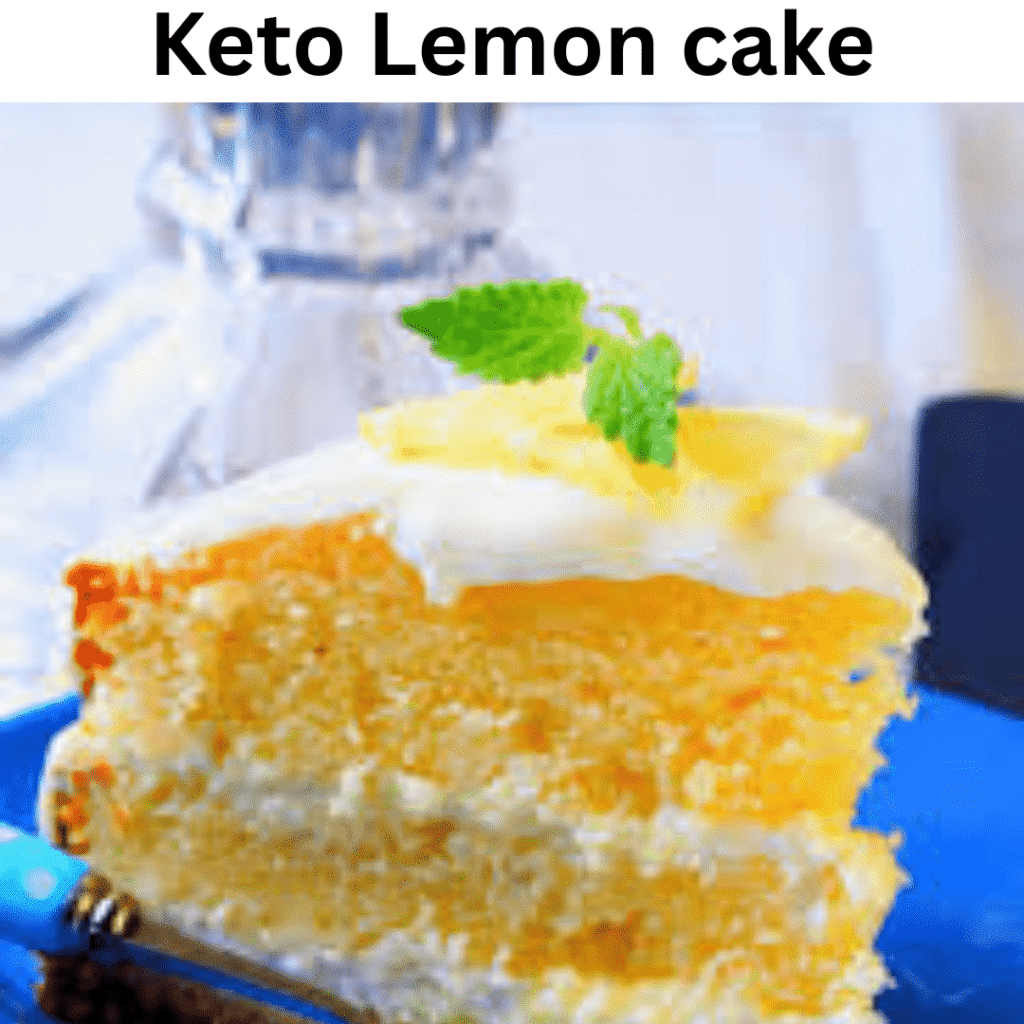
This lemon cake is designed to hit:
- A nut- or seed-flour base (low in carbs compared with wheat flour)
- A sugar substitute/low-glycemic sweetener instead of regular sugar
- Fresh lemon juice + zest to deliver real citrus brightness (not just flavouring)
- A fat-rich base (butter or coconut oil) to support the keto macros and help with moisture
- Quality eggs and leavening so the cake doesn’t become dense like many low-carb bakes often do
Because lemons provide tart, bright flavour, they help psychologically—making the cake feel “indulgent” even without high carbs. The zest is especially key since a lot of lemon oils live in the peel and give fragrance and flavour beyond just lemon juice.
By the end of this recipe you will have: a single-layer cake (about 8”/20cm round or 9” square) that slices nicely, is moist, bold in lemon flavour, and keeps net carbs modest. Then you’ll have full instructions, optional glaze or frosting, storage tips, variations, troubleshooting etc.
Ingredients (for one 8-inch round or 9-inch square cake, ~8 servings)
Dry Ingredients
- 2 cups (approx. 200 g) almond flour, finely ground (blanched)
- ¼ cup (approx. 30 g) coconut flour (this helps absorb moisture and adds structure)
- 1½ teaspoons baking powder
- ¼ teaspoon baking soda
- ½ teaspoon salt
- Zest of 2 medium lemons (about 2 Tbsp) – set aside separately
Wet Ingredients
- 4 large eggs, room temperature
- ½ cup (120 ml) unsweetened almond milk (or other unsweetened nut milk)
- ½ cup (120 ml) melted butter (or coconut oil if you prefer non-dairy; cooled slightly)
- ¼ cup (60 ml) fresh lemon juice (from about 2 medium lemons)
- 1 teaspoon pure vanilla extract
- ½ teaspoon pure lemon extract or emulsion (optional – for extra lemon boost)
Sweetener
- ⅔ cup (approx. 120 g) keto-friendly granulated sweetener such as erythritol/monk fruit blend (measures like sugar)
Optional Glaze or Frosting (adds richness, and still remains keto)
Glaze:
- 1 cup (about 120 g) powdered keto sweetener (powdered erythritol/monk fruit)
- 2 Tbsp (30 ml) fresh lemon juice
- 1 Tbsp (15 ml) melted butter or coconut oil
- A little lemon zest for garnish
Or Cream-Cheese Frosting (for a richer finish):
- 8 oz (225 g) full-fat cream cheese, softened to room temp
- ¼ cup (60 g) powdered keto sweetener
- 1½ Tbsp (22 ml) lemon juice
- ½ teaspoon vanilla extract
- Optional: 1-2 Tbsp heavy cream to loosen if needed
Equipment & Prep Notes
- Pre-heat your oven to 350 °F (175 °C) and position a rack in the centre.
- Line the bottom of your cake pan (8-inch round or 9-inch square) with butter paper, and grease with butter or coconut oil.
- Use a sharp microplane or fine grater for the lemon zest, avoiding the white pith beneath (too much pith = bitter). Avoid over-mixing once combined (that can make the structure dense).
- If your almond flour is coarse, you may want to sift or process lightly to improve texture.
Step-by-Step Instructions
1. Prepare dry mix
In a medium bowl, add almond flour, coconut flour, baking powder, baking soda, salt and the lemon zest. Whisk gently. The lemon zest mixing into the dry ingredients helps distribute the citrus oils and flavour evenly throughout.
2. Prepare wet mix
In a second large bowl, whisk together the eggs until lightly foamy. Then add melted butter (or coconut oil) cooled to warm, the almond milk, lemon juice, vanilla extract and optional lemon extract. Whisk until the mixture is smooth.
3. Combine wet & dry
Pour the wet mixture into the dry ingredients bowl. Using a rubber spatula, fold gently just until all flour is incorporated and you have a smooth batter. Do not over-stir. The batter will be somewhat thick but should spreadable into the pan.
4. Transfer to pan & bake
Spoon the batter into the prepared cake pan, smoothing the top lightly so it is level. Tap the pan gently on the counter to release any large air bubbles. Place in the pre-heated oven and bake for approximately 30-35 minutes. If you’re using a darker pan, you may wish to cover loosely with foil after ~25 minutes to avoid over-browning.
5. Cool
Once baked, remove from the oven and allow the cake to cool for10 minutes. Cooling fully (to room temperature) is particularly important before applying a glaze or frosting—if the cake is warm, the glaze/frosting may melt into it and you’ll lose definition.
6. Glaze or frost (optional)
For glaze: In a small bowl, whisk the powdered sweetener and lemon juice together; stir in melted butter/coconut oil until smooth. If the glaze is thick, add a teaspoon of lemon juice to reach your desired pour-consistency. Drizzle over the cooled cake and use a spatula to help it run over edges. Garnish with a little extra lemon zest.
For cream-cheese frosting: In a bowl, beat softened cream cheese until smooth. Add powdered sweetener, lemon juice and vanilla; continue beating until smooth and slightly fluffy. If the mixture is too thick, add a tablespoon of heavy cream and beat again until spreading consistency is achieved. Use a spatula to spread evenly over the top (and sides if you like) of the cooled cake. Chill for ~20 minutes to set, then decorate with lemon slices or zest if desired.
7. Slice & serve
Once glazed or frosted, use a sharp, clean knife to slice into 8 equal portions (or 10 if you want smaller slices). Serve immediately or chill a little if you prefer it cold. A dollop of sugar-free whipped cream or a few fresh berries (in moderation for keto) can be nice as an accompaniment.
Estimated Nutritional & Macro Considerations
Because ingredient brands vary and each person’s portion size may vary, these are estimates to guide you on whether this fits your keto approach.
For one of 8 slices:
- Approximate calories: ~280-320 kcal
- Fat: ~20-25 g
- Protein: ~8-10 g
- Total carbs: ~6-8 g
- Dietary fibre: ~2-3 g
- Net carbs (total carbs minus fibre): ~4-6 g
If you include the glaze or frosting, the carbs might increase by 1-2 g per slice (depending on sweetener used). Always check your specific sweetener and flours.
Given that some keto diets aim for <20 g net carbs/day, this cake is very manageable as an occasional treat (e.g., one slice = ~4-6 g net carbs). If you’re sharing or portioning smaller slices, you could further reduce the per-slice net carbs.
Variations & Customisations
Here are many ways to modify the base recipe to suit your flavour preference, dietary restrictions or presentation style:
Two-layer or bundt version
- Double the batter and divide into two 8-inch pans for a stacked layer cake. Adjust baking time (maybe 35-40 min). Frost between layers and on top for an elevated presentation.
- Use a bundt pan (10-cup size) for an elegant ring-shaped lemon cake; baking time likely ~40 minutes.
Add poppy seeds or almond slices
- If you like a bit of texture, stir in 2-Tbsp poppy seeds into the batter before pouring into the pan. This adds a subtle nutty crunch and looks decorative.
- Alternatively, sprinkle slivered almonds (toasted lightly) over the top of the batter before baking.
Change flours or nuts
- If you prefer a nut-free version (for allergy reasons), you could experiment with sunflower-seed flour (beware flavour change) or more coconut flour—but note coconut flour absorbs a lot more liquid so recipe needs rebalancing.
- If you use a mix of almond + pecan meal, the flavour becomes richer and deeper—just maintain similar weight of total flour.
Alternative sweeteners and flavours
- You can use any keto-friendly sweetener you like (monk fruit blend, allulose, stevia blend)—just ensure it measures like sugar and is suitable for baking.
- Add ½ teaspoon lemon extract for extra lemon punch, or ½ teaspoon almond extract for an almond-lemon twist.
- For a vanilla-lemon variant: omit lemon extract, keep juice & zest, but add 1 teaspoon pure vanilla extract instead of 1 teaspoon earlier.
Frosting/glaze tweaks
- For a lighter finish: skip frosting, simply dust with powdered sweetener and lemon zest.
- For a richer finish: use mascarpone or full-fat Greek yogurt mixed with lemon juice + sweetener as a “frosting” alternative.
- For “lemon-curd” inspired topping: make a low-carb lemon curd (egg + butter + lemon juice + sweetener) cook gently until thickened, chill and dollop on top.
Make-ahead & freezing
- The cake base (undressed) can be baked ahead and cooled, then wrapped tightly and stored in fridge 2-3 days before glazing/frosting.
- After glazing/frosting, store in an airtight container in fridge up to 4-5 days. The texture often improves a bit after chilling for a few hours—flavours meld.
- You can freeze slices individually (wrap in parchment + foil) for up to 3 months. Thaw in fridge overnight before serving.
Troubleshooting & Expert Tips
Why did my cake rise unevenly or collapse?
- Possibly because the baking powder or baking soda was old/weak; always use fresh for best rise.
- If your oven is too hot (or uses convection without adjusting), the edges may set before centre rises—ensure correct temperature and pan placement (centre rack).
- Over-mixing the batter can deflate the air you incorporated, leading to a dense cake. Mix just until combined.
- If the cake is under-baked (centre jiggly), it may collapse as it cools. Check with toothpick.
Why is the texture too dense or gritty?
- Coarse almond flour (not finely ground) can produce a gritty texture—use “super-fine” almond flour or sift it.
- Excessive coconut flour relative to liquid can make it dry/dense—be careful with proportions.
- Too little fat (butter or oil) or too many dry ingredients will lead to dryness—keep the fat/liquid ratio balanced.
Why is the lemon flavour weak or too strong?
- Weak flavour: Perhaps the lemons were not fresh, or you didn’t use much zest. Zest carries the volatile oils that bring punch.
- Over-strong: If you used too much lemon extract (or poor-quality), the flavour can become artificial. Use fresh lemon juice/zest first, and if using extract, a small amount.
- Ensure you avoid the white pith when zesting—pith is bitter and can dull flavour.
Why is the frosting/glaze too runny or too firm?
- Too runny: The cake might be warm when glaze applied; apply only when cake is fully cooled. Or the ratio of lemon juice to powdered sweetener may be too high—add more sweetener or reduce liquid.
- Too firm: If using cream cheese frosting and chilling too long, it may become overly firm. Let it soften a little before cutting or serve slightly chilled.
Storage issues (drying out, soggy, etc)
- Cake dries out: Wrap tightly or store in airtight container. Low-carb bakes sometimes dry faster because no starch/plenty of fat means less “moisture retention” than high-gluten cakes.
- Cake too moist/soggy: Perhaps you cut it while still warm; moisture inside may condense. Always cool fully; if storing covered, leave a small vent so steam escapes or use parchment to keep bottom dry.
Serving Suggestions & Presentation
- Serve a slice with a dollop of unsweetened whipped cream (made from heavy cream + a little keto sweetener + vanilla) for a decadent pairing.
- Decorate the top with thin lemon slices or half-moon slices, plus a scatter of fresh mint leaves for colour contrast.
- For an extra citrus boost, drizzle a little extra lemon juice mixed with powdered sweetener just before serving.
- Pair with a cup of black coffee, herbal tea, or sparkling water with lemon wedge to keep the profile clean and refreshing (rather than heavy).
- If you’re serving guests and want a show-stopper, a two-layer stack with cream-cheese frosting between layers and a light lemon curd filling gives an elegant look.
Why This Recipe Works (and Why It’s “Cake-like”)
- Almond flour provides bulk & structure while remaining low in carbs—its natural oils keep the crumb tender.
- Coconut flour supplementation adds absorptive power so the batter doesn’t become overly wet or collapse; it helps maintain a nice sliceable texture.
- Eggs + butter/oil supply richness and lift (especially the butter/oil keep the fat content high, which is good for keto and contributes to moistness).
- Baking powder/soda ensure enough rise and lighten the crumb (otherwise many almond-flour cakes become heavy “loaves” rather than cakes).
- Lemon juice + zest deliver the main flavour—without relying solely on extracts. Real citrus gives brightness, texture, aroma.
- Sugar substitute keeps the sweetness without spiking carbs.
- Optional glaze/frosting adds that sense of dessert / indulgence, which many keto-friendly treats lack.
Together, these elements allow the cake to feel like a classic lemon cake—even though the ingredients are significantly changed for low carb.