
This keto grilled salmon recipe is one of those dishes that I’ve cooked so many times that the page in my notebook is full of smudges, tiny oil stains, and lemon marks. And honestly, that’s how you know a recipe has been loved and used.
What I’m sharing here isn’t written in fancy cooking language or professional chef talk. It’s written just the way I’d explain it to a friend or a cousin who wants to try keto and doesn’t know where to start. Keto food doesn’t have to be complicated, and grilled salmon especially is one of those dishes that almost cooks itself if you show it a little care.
This recipe is long, detailed, and full of small tips, stories, and explanations—the kind you get only when someone has cooked something many times over. My goal is simple: by the time you finish reading this, you should feel confident enough to make perfect keto grilled salmon even if you’re tired, short on ingredients, or not the kind of person who follows strict measurements.
So let’s begin, slowly and calmly, just like cooking should feel.
Why Keto Grilled Salmon Fits So Well in a Daily Keto Meal
Before jumping into ingredients, I want to explain why grilled salmon is such a favorite for people on keto. Salmon happens to be naturally perfect for this. It’s rich in omega-3 fats, gentle on the stomach, filling without being heavy, and it cooks quickly.
On days when you don’t want to cook something complicated or when you need a meal that leaves you satisfied but not bloated, grilled salmon is ideal. Keto meals sometimes get a reputation for being predictable—too much cheese, too many eggs—but salmon adds variety without breaking the keto rulebook.
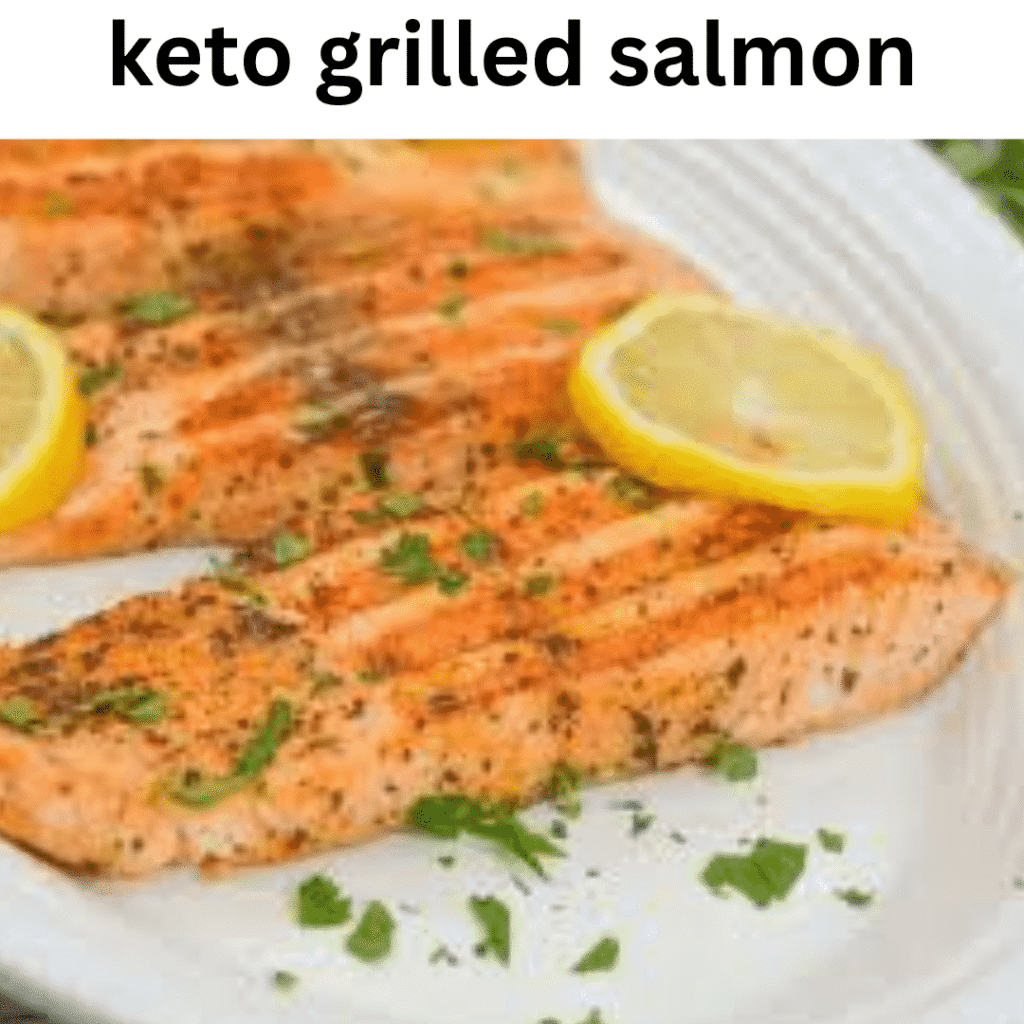
Grilling salmon gives it a slight char, a smoky flavor, and a crisp skin that tastes like heaven if you do it right. The inside stays juicy, soft, and flaky, which makes the whole dish comforting in a way that only simple food can be.
Ingredients (Serves 2–3) – Simple, Accessible, and Keto-Friendly
For the Salmon
- 2 salmon fillets (skin on, about 180–200 g each)
- 1½ tablespoons olive oil
- 1 tablespoon melted butter
- 2–3 garlic cloves, crushed or grated
- ½ lemon, juiced
- ¾ teaspoon salt
- ½ teaspoon black pepper
- 1 teaspoon smoked paprika
- ½ teaspoon chili flakes (optional)
For Garnish
- A few lemon slices
- A small handful of fresh parsley, coriander, or dill
- A drizzle of olive oil or melted butter
Optional Keto Sides
- Grilled zucchini
- Butter-tossed asparagus
- Mashed cauliflower
- A simple green salad with olive oil and salt
Step 1: Choosing and Preparing Your Salmon
Choosing salmon is like choosing fruit—your meal depends on how fresh it is. When I go to buy salmon, I look for fillets that have a bright, lively color. They shouldn’t look dull or grayish. If the surface is slightly glossy and firm to the touch, that’s a good sign. Some people prefer wild-caught salmon for its firmer texture and deeper flavor, while others go for farmed salmon because it’s softer and milder. Honestly, both work fine for grilling.
Once home, the first thing you must do is pat the salmon dry. This step seems simple but changes everything. Wet salmon doesn’t grill well; it ends up steaming instead of crisping.
You don’t have to squeeze it—just dry the surface so the marinade sticks better.
Step 2: Making the Marinade – Simple but Flavorful
Take a small bowl and start with the fats. First, add the olive oil. Then stir in the melted butter. Olive oil keeps the salmon moist and prevents sticking, while butter gives it a deep, warm flavor when it hits the heat.
Add the crushed garlic. I always recommend fresh garlic here because it brings a stronger aroma than powdered garlic, especially for grilled dishes.
Squeeze half a lemon. Don’t overdo it. Lemon is refreshing, but too much of it can start cooking the salmon prematurely, making the texture mushy.
Now sprinkle in the salt, pepper, smoked paprika, and chili flakes. Give everything a slow stir. The mixture should look golden with reddish tones from the paprika, and you’ll see tiny bits of garlic floating inside.
Taste the marinade just a little. If it tastes slightly stronger than you’d expect, that’s good. Salmon won’t absorb all of it.
Step 3: Marinating the Salmon (But Not Too Long)
Lay the salmon fillets on a plate, and slowly spoon the marinade over them. Don’t press too hard—salmon is delicate.
Make sure the marinade covers the top and sides. The skin side doesn’t need heavy seasoning, but do brush a thin layer of oil on it so it doesn’t stick to the grill.
Let the salmon sit for 15–30 minutes.
This is enough for the flavors to settle, but not long enough to break down the meat. Salmon is not like chicken or beef; it marinates quickly.
As it rests, you’ll notice the garlic smell deepen, and the paprika will give the fillets a soft orange glow. That’s when you know it’s ready.
Step 4: Heating the Grill Properly
This is probably the most overlooked step in home cooking. People place salmon on a grill that isn’t fully heated, and then the salmon sticks, tears apart, and loses half its beauty.
Heat your grill for at least 10 minutes.
A properly heated grill does three important things:
- It crisps the skin instantly.
- It locks in the juices.
- It prevents sticking.
Use less oil.
Step 5: Grilling the Salmon – The Heart of the Recipe
Now for the part everyone worries about: the actual grilling.
Place the salmon skin-side down first. You should hear a soft sizzle—not too violent, not too quiet.
Do not move it.
Don’t poke it.
Don’t flip it too early.
Let it build a crust.
Sizzle for 5 minutes.
You’ll notice the color rising upward from the bottom, slowly turning the raw bright orange shade into a lighter, cooked pink. That’s your visual guide.
Once the edges turn opaque and the spatula slides under smoothly, flip the salmon carefully. If it resists, give it one more minute.
Cook the second side for 3–5 minutes.
If you want extra flavor, brush a thin layer of leftover marinade during the final minute of cooking.
But avoid overcooking—it dries salmon faster than people expect. Proper salmon should flake easily but still look moist inside.
Step 6: Resting the Salmon (The Step Nobody Talks About)
When the salmon is done, take it off the grill and place it on a clean plate.
Now leave it alone for 3–5 minutes.
If you cut into salmon right away, the juices spill out and the inside becomes dry. Resting keeps it tender.
During this time, you can prepare the garnish or plate your sides.
Step 7: Garnishing and Serving
Once rested, add a bit of olive oil or butter. This simple touch makes the salmon shine and adds richness.
Sprinkle chopped parsley, coriander, or dill. Each herb gives a slightly different personality:
- Parsley is fresh and mild
- Coriander adds a bright kick
- Dill gives a soft, earthy aroma
Add lemon slices on the side so each person can adjust the taste to their liking.
Serve it warm with any keto side you like.
Some Helpful Little Tips I Learned Through Experience
Here are things I figured out through trial and error, not through fancy cooking rules:
- If your salmon oozes white protein (albumin), don’t worry. It’s normal.
- If you want crispier skin, press the salmon gently for the first 10 seconds only.
- Don’t over-marinate. Too much lemon softens the meat.
- Always preheat your grill well. It’s half the battle.
- Use a thin spatula. Thick ones tear fish.
Simple Keto Side Ideas That Make the Meal Complete
1. Buttered Asparagus
Heat butter, toss asparagus, sprinkle salt and pepper, and cook for 4 minutes.
2. Grilled Zucchini
Slice zucchini, brush with oil, grill 1 minute each side, add salt.
3. Cauliflower Mash
Boil cauliflower, drain completely, blend with butter, garlic, and salt.
4. Basic Keto Salad
Spinach + olive oil + salt + lemon = always perfect.
Final Thoughts – A Simple, Honest, Comforting Keto Meal
This keto grilled salmon isn’t just a “recipe”—it’s the type of meal you can rely on during long days or when you don’t have the patience for complicated dishes. It’s gentle, wholesome, and naturally keto without needing heavy sauces or artificial ingredients.
Cooking salmon teaches patience. You learn not to flip too soon, not to rush the grill, not to drown it in spices. You learn to trust the heat and your own timing. And when the salmon comes out perfectly flaky, with crisp edges and a soft center, it feels like a small victory—not just in cooking, but in the rhythm of the day.