
Introduction: Why this salad works on keto & Mediterranean lines
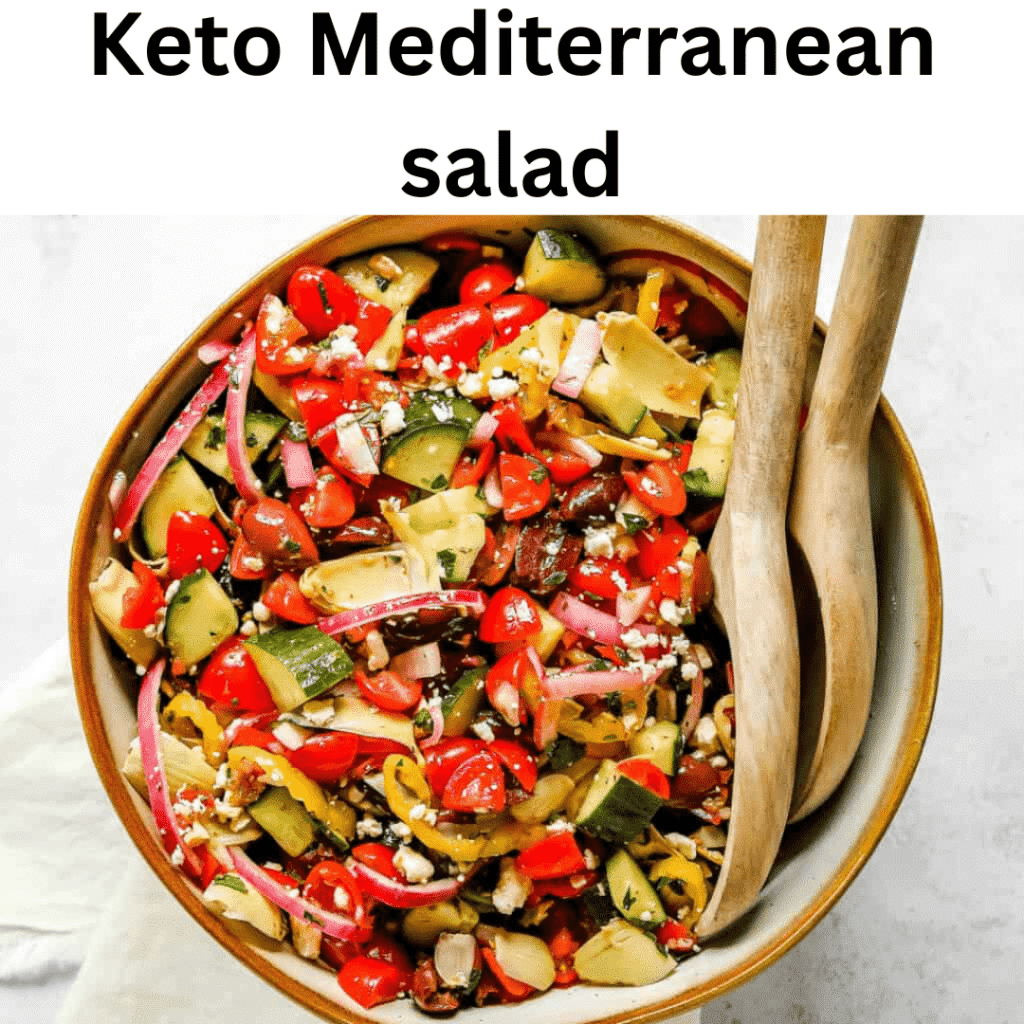
The Keto Mediterranean salad is widely praised for its emphasis on fresh vegetables, good fats (especially olive oil), herbs, and moderate cheese/olives. When you combine that with the low-carb, high-healthy-fat approach of a ketogenic (“keto”) diet, you get a salad that satisfies both taste and nutrition goals.
Key factors that make this salad suitable for keto:
- Minimal starchy carbohydrates: instead of grains, potatoes or heavy dressings, the salad uses fresh veggies and olives/feta for flavour.
- Healthy fats: extra virgin olive oil, olives, feta cheese – all contribute fat and flavour, without adding large carb loads.
- Fresh, bold flavours: Mediterranean herbs (oregano, parsley, mint or dill), citrus/lemon juice, vinegar – to keep it bright and appetising.
- Flexibility: You can add or subtract vegetables, herbs and proteins as long as you keep net carbs low.
In the sections that follow I’ll explain ingredients, step-by-step instructions, variations, storage, macros tips and more. This ensures you’ll not just follow the recipe, but understand how to adapt it for your needs.
Ingredients (for about 4 servings)
Salad base & mix
- 1 medium English cucumber (or 2 small Persian cucumbers) – about 300 g total, sliced/quartered.
- 1 pint (~300 g) grape or cherry tomatoes, halved.
- 1/2 medium red onion, thinly sliced (about 80 g).
- 1 medium yellow bell pepper (or green if you prefer), sliced into thin strips (~150 g).
- 1/2 to 1 cup pitted Kalamata olives, halved (~100 g).
- 1 cup chopped fresh parsley.
- Feta cheese, crumbled (about 7 oz).
- Optional: 1 ripe avocado, chopped, for extra healthy fats.
- Optional: 2 tablespoons toasted pine nuts or chopped walnuts/almonds (for crunch, though nuts add fat so count them in your macros).
Dressing
- ¼ cup olive oil.
- 3 Tbsp (≈ 45 ml) fresh lemon juice (about one large lemon).
- 2 Tbsp apple cider vinegar).
- 1 clove garlic, finely minced or grated.
- ½ tsp dried oregano (or 1 tsp fresh oregano).
- 1 tsp Dijon mustard.
- Salt and pepper, to taste.
- Optional: a small pinch of a keto-friendly sweetener (like monk fruit/erythritol) if you like a touch of sweetness to balance the acid.
Notes on ingredients & keto suitability
- Cucumbers and tomatoes: while tomatoes have some carbs, grape/cherry tomatoes are moderate and in a salad like this the overall net carbs stay low if portions are reasonable.
- Olives: very keto-friendly; they add healthy fats and briny flavour.
- Feta cheese: provides protein, fat and flavour. Good on keto.
- Olive oil: the base of the dressing, giving “good fat” rather than saturated or highly processed fats.
- Lemon juice & vinegar: add bright flavour with minimal carbs.
- Herbs: parsley, mint, dill, oregano – all low-carb and add aromatic dimension that makes the salad vibrant.
- Nuts (if used): add fat + texture; just count them in your macros.
- Avocado (optional): very keto-friendly; adds creaminess and healthy monounsaturated fats.
Equipment & Prep Tips
- Large mixing bowl for the salad.
- Medium bowl/jar for making the dressing (or whisking).
- Sharp knife and cutting board for the vegetables and herbs.
- Optional: salad spinner (to dry washed greens or herbs) or paper towels to pat dry.
- Optional: measuring spoons/cups for accuracy.
Prep tips:
- Wash and dry your vegetables thoroughly. Excess water may dilute the dressing.
- If using cucumbers with thick skins, you may want to peel them or remove seeds/soft core to avoid extra water content.
Step-by-Step Instructions
Follow these steps for assembling the salad. The key is to balance textures (crisp vegetables, creamy feta/avocado), flavours (bright lemon/acid, briny olives, fresh herbs) and to toss gently so you don’t crush the vegetables.
1. Prepare the vegetables and mix the base
- On your cutting board, slice the cucumber into half-moons or quarter if it’s large. If you peeled it, that’s fine too. Place in the large mixing bowl.
- Halve the grape/cherry tomatoes and add them to the bowl.
- Slice the bell pepper into thin strips (about ¼–½ inch thick) and add to the bowl.
- Thinly slice the red onion, and add. If you soaked the onion slices to mellow them, drain and pat dry first.
- Add the pitted, halved Kalamata olives.
- Chop the fresh parsley (and/or mint/dill) and add to the bowl. If you include avocado, add the chopped avocado now (or just before serving to avoid browning).
- Add feta cheese over the top of the vegetables.
2. Make the dressing
- In a medium bowl or jar (with lid) add the olive oil, lemon juice, red wine vinegar, Dijon mustard, minced garlic, dried oregano, salt, and pepper.
- Whisk (or shake, if using a jar) until the ingredients are fully combined and the dressing emulsifies (the oil will slightly blend with the acid).
- Taste and adjust: if you feel it’s too tart, you may add another teaspoon of lemon juice or a small pinch of sweetener; if too sharp, add another tablespoon of olive oil or a little water to mellow. Always good to taste dressings before applying.
3. Dressing and tossing
- Pour the dressing over the salad base in the mixing bowl.
- Gently toss the mixed salad so that the dressing coats all the vegetables and feta.
- Let the salad rest for about 5–10 minutes to allow the taste to meld. If you have time, chilling it in the fridge for ~30 minutes helps deepen the flavours and gives the olives and dressing a chance to permeate the vegetables.
4. Serve and garnish
- Transfer the salad to individual serving bowls or a nice large serving platter.
- If you used avocado or toasted nuts, add them last just before serving to preserve texture.
- Sprinkle a tiny extra pinch of chopped fresh herbs (parsley/mint) or a light dusting of dried oregano for visual appeal and flavour pop.
- Serve either as a side dish for a main meal (grilled fish, chicken, etc.), or as a light main course on its own—especially if you include avocado and nuts (makes it more substantial).
Nutritional & Macro Considerations
Because you’re on a keto‐style diet, you’ll want to keep an eye on net carbs (total carbs minus fibre) and aim for high quality fats and moderate protein. Here’s how this salad helps with that:
- The bulk of the salad is non‐starchy vegetables (cucumber, tomatoes, pepper, onion) which are relatively low in net carbs compared to grains or tubers.
- The olives, olive oil and feta supply healthy fats—this is crucial for keeping you satiated in a keto meal.
- The dressing uses minimal sugar, and you could even omit the sweetener entirely to keep carbs as low as possible.
- If you choose to include avocado and nuts, you’ll raise fat content (good) but also slightly raise calories—so check your overall daily intake to stay within your ketogenic targets.
As a rough estimate: assuming 4 servings, each portion might contain around 4–6 g net carbs (depending on tomato/pepper quantity), ~15–20 g fat (from olive oil, olives, feta), ~6–10 g protein (from feta + possibly nuts/avocado). If you add avocado/nuts, fat might rise to 20–25 g+ per serving. Always calculate according to your specific brand/quantity.
Variations & Customisations
Protein additions
- Add grilled chicken strips, cooked shrimp, or cooked salmon pieces to turn this salad into a full meal. Ensure protein is keto-friendly (no sugary marinade).
- Add canned tuna (in water or olive oil) and toss with the same veggies/dressing for a quick protein‐rich version.
- For vegetarian keto, you might omit meat and instead boost the nuts/seeds (e.g., pistachios, almonds) and increase the feta.
Vegetable swaps or additions
- If you like zucchini or yellow squash, thinly sliced ribbons are nice.
- Use fresh spinach or baby arugula as a base beneath the vegetables for added greens.
- Add roasted eggplant or grilled zucchini for a richer Mediterranean feel (just ensure they are cooled and drained of excess moisture).
Dressing
- Take red wine vinegar for apple cider vinegar for a milder tang.
- Add a teaspoon of capers.
- If you like a creamier dressing, whisk in 2–3 Tbsp full-fat Greek yogurt (if your diet allows) or use 1 Tbsp tahini. (Mind the carb count if you use yogurt.)
- Add fresh herbs like chopped basil, dill or mint for variety.
Cheese & fat swaps
- If you prefer a different cheese, use goat cheese or aged parmesan (sparingly) instead of feta.
- If avoiding dairy, omit the feta and increase olives/avocado/nuts and double the olive oil in the dressing.
- If you like more crunch, add coarse-chopped walnuts, almonds or pecans (unsweetened) but reduce some olive oil to keep calories balanced.
Make-ahead & meal-prep
- You can prepare the dressing ahead and store in a sealed jar in the refrigerator for up to 4–5 days.
- Leftovers (undressed) will keep 1–2 days in the fridge; once dressed, they are best consumed within a few hours to preserve texture.
Serving Suggestions & Pairings
- Serve alongside grilled fish, chicken breast or lamb chops for a deluxe Mediterranean-keto plate.
- Use it as a light main meal for lunch: pair with half an avocado and perhaps a boiled egg for extra protein.
- If you eat bread occasionally, you might serve a small slice of keto bread on the side.
- For extra Mediterranean flair, add a few lemon wedges and a sprinkle of chopped fresh oregano when serving.
- A chilled “dry” white wine (if you allow alcohol in your diet) or sparkling water with lemon goes nicely.
Storage, Leftovers & Practical Tips
- Vegetables may soften over longer storage.
- Store dressing in a sealed jar refrigerated for up to 5 days; shake before use as separation may occur.
- If you anticipate leftovers, slice vegetables a little thicker so they hold texture better on the second day.
- If the salad becomes watery (this happens if vegetables release water after dressing), drain off excess liquid before serving or add fresh chopped parsley to refresh texture.
Why the Combination Works: Nutrition & Flavour Science
- Textural contrast: crisp cucumber + juicy tomatoes + tender feta + firm olives = satisfying mouth-feel, which makes the salad feel more substantial.
- Fat + acid synergy: olive oil (fat) + lemon/vinegar (acid) improves flavour absorption and helps you enjoy the fat (important on keto).
- Brine & umami: olives and feta supply saltiness and umami notes that make the salad flavourful — this helps when you’re restricting carbs and want rich taste.
- Herb freshness: parsley/mint/dill add aromatics and freshness; this is especially helpful in low‐carb meals so you don’t miss “richness” from carbs.
- Phytonutrients & fibre: the fresh vegetables bring vitamins (like C, K), minerals (potassium, magnesium) and fibre – helpful to support overall health when doing keto.
- Satiety factor: healthy fats + protein (from feta/nuts/olive oil) + fibre = a well-rounded meal that helps you stay full, which is key in keto where carb meals often leave you less satisfied.
Troubleshooting & FAQ
Q: My salad turned watery / soggy. What happened?
A: Often due to high-water content vegetables (e.g., cucumbers with thick skins, tomatoes that are very ripe) releasing moisture. Solution: choose thinner-skinned cucumbers (English or Persian), pat them dry; drain tomatoes or use cherry/grape variety; toss salad just before serving; if making ahead, dress the salad at the last minute.
Q: Dressing seems too strong or too weak.
A: Dressings depend on personal taste. If too tart/acidic, add more olive oil or a tiny pinch of sweetener. If too mild, add a bit more lemon juice or vinegar and taste again. Always season with salt & pepper after mixing dressing, since salt brings out flavours.
Q: Can I omit the cheese / dairy?
A: Yes, you can omit feta or substitute with non-dairy cheese or skip cheese altogether. To maintain richness, increase olives, nuts or add avocado. But note: cheeseless version will slightly alter flavour and texture (less creaminess and saltiness).
Q: How many carbs will I get from this salad?
A: It depends on portion size and exact amounts, but a reasonable estimate for the base salad (without avocado/nuts) is around 4–6 g net carbs per serving for four servings. If you add avocado/nuts, add 1–3 g more net carbs accordingly. To be safe: check your specific lemon juice, tomato variety and pepper amount.
Q: I don’t like one of the vegetables (e.g., bell pepper). Can I substitute?
A: Absolutely. You could substitute with thinly sliced zucchini, radish rounds, or steamed/roasted cauliflower florets. Just keep track of net carbs and texture: substitute should be low-carb and maintain salad crunch.
Final Words & Serving Encouragement
This keto Mediterranean salad gives you the best of both worlds: fresh, bold Mediterranean taste, and macros that support a ketogenic lifestyle. It’s colourful, full of flavour, has satisfying texture and is flexible enough to be a side dish or a main.
Whether you’re serving it for a weekday lunch, prepping it as part of a keto meal plan, or presenting it for a dinner with guests, it adapts beautifully.
One last tip: when you serve it, mention to your diners (or remind yourself!) to taste the dressing and adjust before final toss. Often a little extra lemon juice or a final pinch of salt makes all the difference in lifting the dish from “good” to “great”.
Enjoy your salad, savour the crunch and flavour — and relish the fact you’re eating something both nutritious and delicious.